
Hand Controls for Drivers with Disabilities: Options, Features, and Benefits
For many people with mobility challenges, driving is more than a convenience — it’s a vital part of independence. Hand controls allow individuals with limited or no leg function to operate a vehicle safely and comfortably using their hands and arms. Whether you’re a new driver or seeking to return to driving after an injury, there are a wide range of hand control options available to fit your unique needs and driving habits.
This guide covers the most common types of hand controls, key features, and complementary driving aids, so you can feel confident navigating the road ahead.
Most Common Types of Hand Controls
Push-Pull Hand Controls
- Push forward to brake
- Pull backward to accelerate
- Ideal for drivers with limited or no leg mobility and strong upper body control
Push-Rock Hand Controls
- Push forward to brake
- Rock backward to accelerate
- Ergonomic wrist movement suits drivers with reduced finger strength or wrist flexibility
Push-Right-Angle Hand Controls
- Push forward to brake
- Push downward (at a right angle) to accelerate
- Preferred by users who are more comfortable with downward arm motions
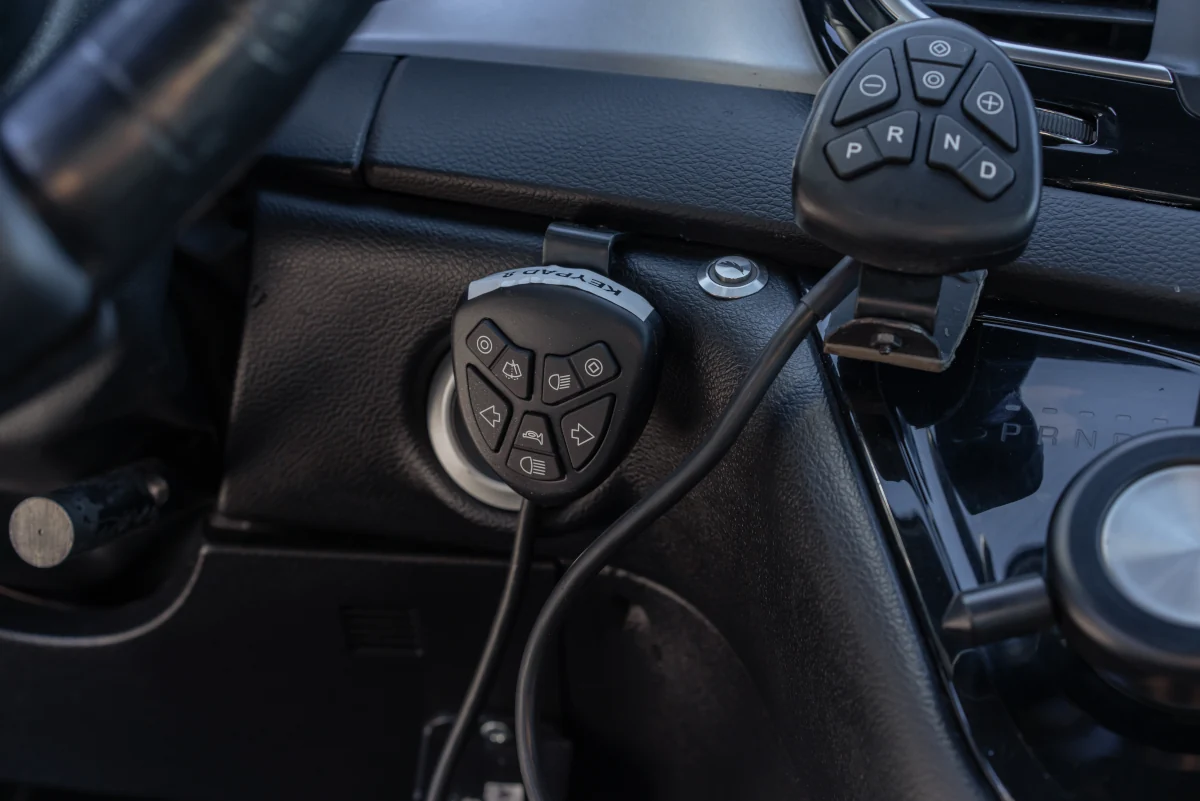
Electronic Hand Controls
- Acceleration and braking controlled electronically via buttons, touchpads, or joysticks
- Offers minimal physical effort and high customization
- Suitable for drivers with limited strength or range of motion in hands or arms
Steering Aids That Pair with Hand Controls
Spinner Knobs
- Easy one-handed steering using a basic rotating knob
Tri-Pin Grips
- Three-point grip offers more control for those with limited hand strength
Palm Grips
- Cup-style grip for open-handed steering assistance
Amputee Rings
- Specialized grip design for drivers using prosthetics
Additional Driving Modifications
Left-Foot Accelerator
- Allows drivers to accelerate with their left foot instead of the right
- Commonly installed alongside hand controls for additional customization
Joystick Driving Systems
- Fully electronic driving system using a joystick for acceleration, braking, and steering
- Typically used in highly specialized situations such as quadriplegia or other severe mobility limitations
Voice-Activated or Remote Controls
- Controls secondary functions like lights, wipers, turn signals, and horn
- Designed to reduce driver workload and increase safety when paired with primary hand controls
Professional Installation and Driver Evaluation
Hand control systems should always be installed by a certified mobility equipment dealer or technician. Before choosing a setup, many users complete a driver evaluation through an occupational therapist or a driving rehabilitation specialist. This ensures the selected equipment aligns with both medical needs and driving goals.Why Work with a Canadian Mobility Van Provider
Universal Motion’s team understands Canadian driving conditions, safety regulations, and funding systems. We offer personalized consultations, expert installations, and support before and after your purchase. Whether you’re modifying a vehicle or purchasing a pre-converted van, our experienced staff will guide you every step of the way.
Check out our Inventory of accessible vehicles or learn more about our Van Rentals if you’re not quite ready to buy.
Frequently Asked Questions (FAQs)
Choosing the right hand controls can feel overwhelming—especially if you’re new to adaptive driving equipment. Here are some common questions we hear from drivers, caregivers, and families starting this journey:Do I need a prescription or special license for hand controls? -
In many cases, yes. You’ll likely need an assessment from an occupational therapist or driving rehab specialist. Some provinces also require a driving test with your adapted vehicle.
Can hand controls be installed in any vehicle? +
Hand controls work best in vehicles with automatic transmissions and enough cabin space to accommodate mobility equipment. Most cars, vans, and SUVs can be adapted, but it’s best to consult a certified installer.
How much do hand controls cost? +
Pricing varies depending on the system. Basic mechanical hand controls may cost $1,500–$3,500 installed. Electronic or joystick systems are more complex and can exceed $10,000.
Does insurance or government funding cover the cost? +
Some provincial programs, disability benefits, and insurance plans may contribute to the cost. At Universal Motion, we help our clients explore Canadian funding options and submit the right paperwork.
What if I only need temporary hand controls? +
If you’re recovering from surgery or a temporary condition, our Rental Vehicles include models equipped with hand controls and other mobility features.
Ready to Take the Next Step?
At Universal Motion, we believe in mobility without barriers. Whether you’re a
first-time driver or returning to the road with new challenges, our team is here to help. We offer custom
hand control installations, full driver evaluations, and access to reliable, Canadian-compliant vehicles.
Contact us today to book a consultation or browse our current Inventory. Let’s find the solution that fits your life — and gets you back behind the wheel.